
Honest good working local company. The amount they quoted me on the phone was the price I paid after the service was completed.
Chimney repair in Bloomfield, NJ
A stain spreading across a ceiling is a water problem with four possible causes, and the difference between them is which one you pay to fix.
5.0from 38 Google reviews20 towns · open 7:00 AM–9:00 PM
The short answer
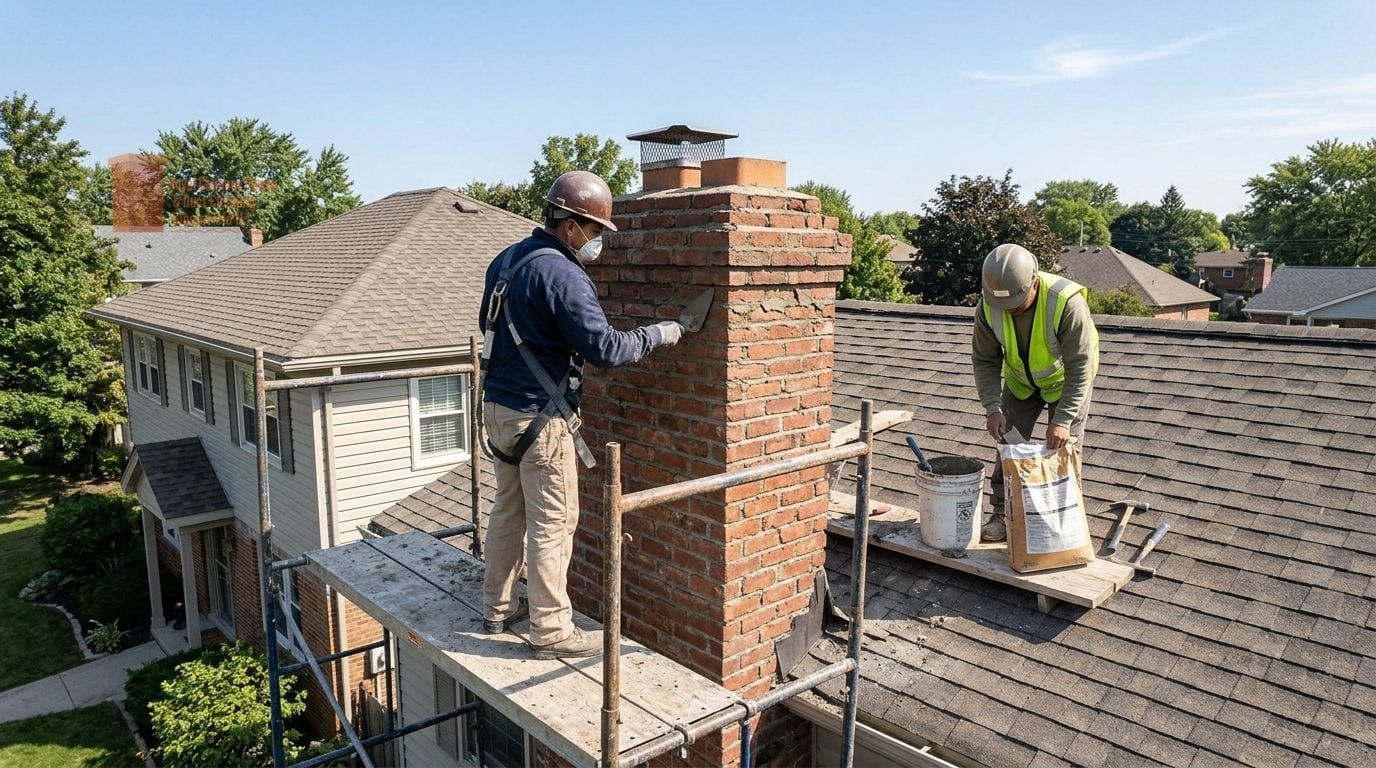
Chimney repair covers four things that fail in roughly that order in New Jersey housing: the slab across the top, the lid over the opening, the metalwork where the stack breaks the roofline, and the shaft running down the middle. Almost every damp patch on a bedroom ceiling comes from one of those four, and telling them apart is a twenty-minute job with a ladder and a camera. Leaving it to another winter is not, because water that gets into masonry in November freezes in January and takes the mortar apart from inside. Bloomfield housing is largely pre-war, which means most of these chimneys have absorbed something close to a hundred cycles of freeze and thaw, and it also means the fifth repair — a liner correctly sized to the appliance after an oil-to-gas conversion left the flue several sizes too wide — is the one we write up most often here.
The crown is not the cap, and people are charged for the wrong one
The crown is the sloped concrete slab across the top of the masonry that throws water off the stack. The cap is the metal lid that sits over the flue opening itself. They fail differently and they cost differently, and being quoted for one when you need the other is common enough to be worth naming. A crown cracks because water sat in a hairline, froze, and widened it — and on a pre-war Bloomfield stack that has happened perhaps ninety times. Once the crack reaches the flue tile, water runs straight down inside the masonry rather than off the top of it, which is why the stain appears in a bedroom rather than at the ceiling by the fireplace. A skim of mortar over a cracked crown looks like a repair for about one season.
- The crown is concrete and sheds water off the whole stack
- The cap is metal and covers the flue opening only
- A crack that reaches the tile is a rebuild, not a resurface
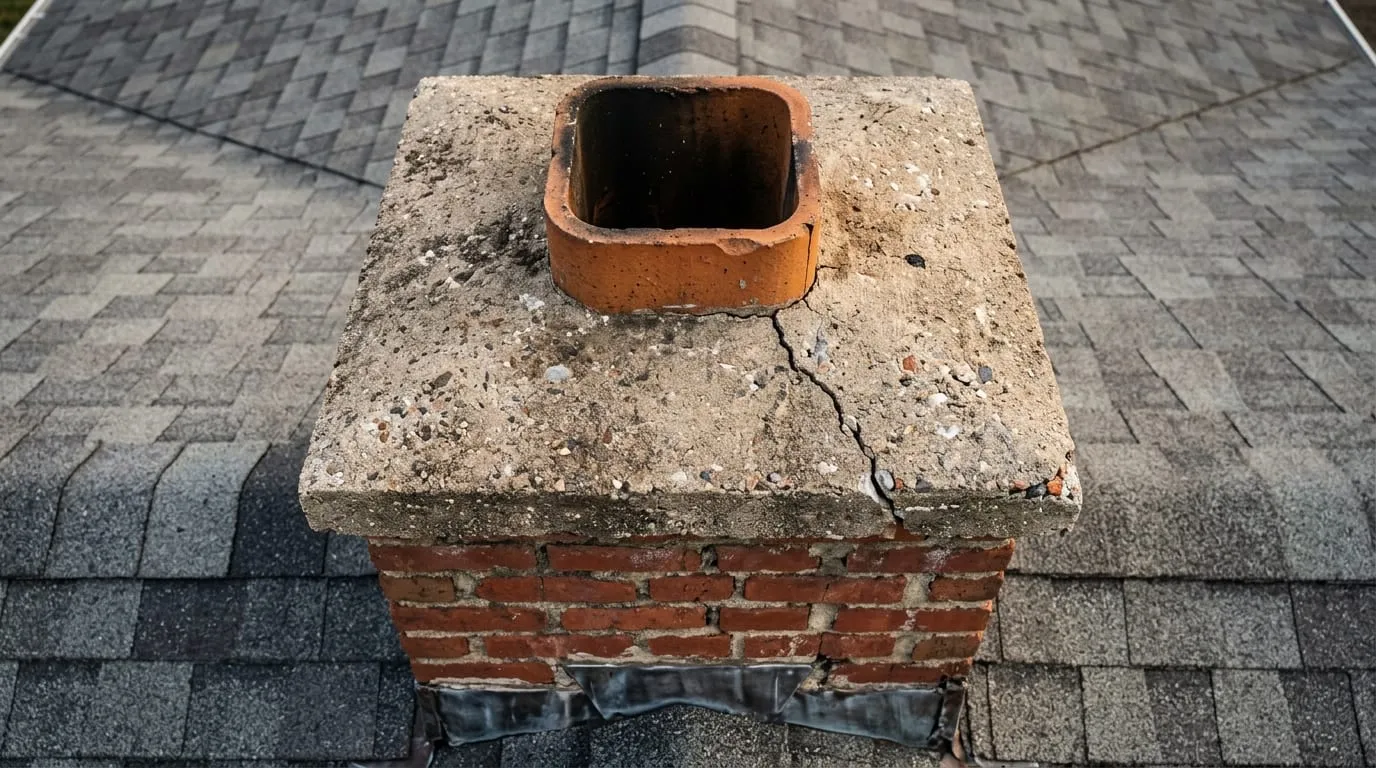
Four things let water into a chimney. Finding out which one takes twenty minutes; ignoring it for a winter takes the mortar apart from inside.
Flashing fails quietly, and mastic hides it for a year
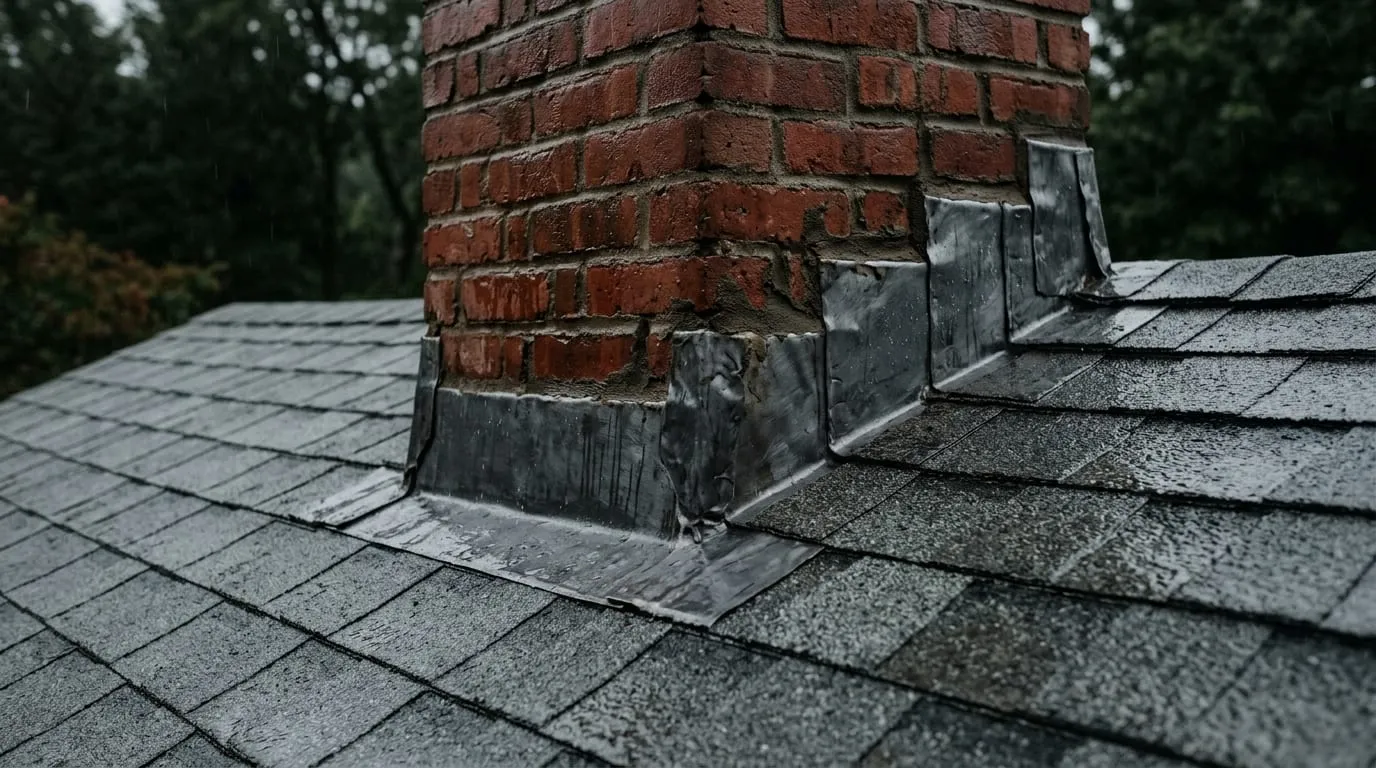
The metalwork closing the gap where a stack breaks through a roof is called flashing, and on older houses it is the detail most often done badly. Done properly, step flashing is worked into the mortar joints of the brickwork and dressed down over the shingles so that water is directed out and away at every course. Done cheaply, a tube of black mastic is run round the join, which sheds water for a winter and then cracks. The tell is a stain that appears at the ceiling near the chimney breast rather than anywhere else, and that gets worse after wind-driven rain rather than after ordinary rain. Once mastic has been used, the repair is to strip it back and do the metalwork, because sealant over sealant is where this goes for years.
Relining after an oil-to-gas conversion
This is the repair that pre-war Essex County housing generates more than any other. Somebody swapped coal for oil, then oil for gas, and nobody touched the chimney. What lives at the bottom of it now produces a small fraction of the volume and almost none of the heat that shaft was proportioned around. The exhaust cools on the way up, condenses before it reaches the top, and the condensate is acidic. Over years it takes the mortar joints out from the inside and the damage appears as staining, spalling brick or a draught that has stopped working. The fix is a stainless liner sized to the appliance that is actually connected rather than to the flue that happens to exist. It is also the repair that most often makes a chimney properly usable again rather than merely safe.
- A flue built for coal is far larger than a gas appliance needs
- Cool exhaust condenses, and the condensate is acidic
- The liner is sized to the appliance, never to the old flue
Masonry, and knowing when to leave it alone
Not every tired chimney needs work, and a hundred-year-old stack with some weathering on it is not the same thing as a stack that is failing. What matters is whether water has a route in. Open mortar joints on a windward face, brick that has begun to spall and shed its face, or a stack that has shifted out of plumb are all reasons to act. Surface staining, old repointing in a slightly different colour, or a crown with fine crazing but no path through are usually reasons to photograph it and look again next year. We would rather write "watch this" than sell a rebuild, partly because it is honest and partly because the households who keep calling are the ones who were told the truth the first time.
On the job
What this looks like in practice
A crown rebuilt, not skimmed over
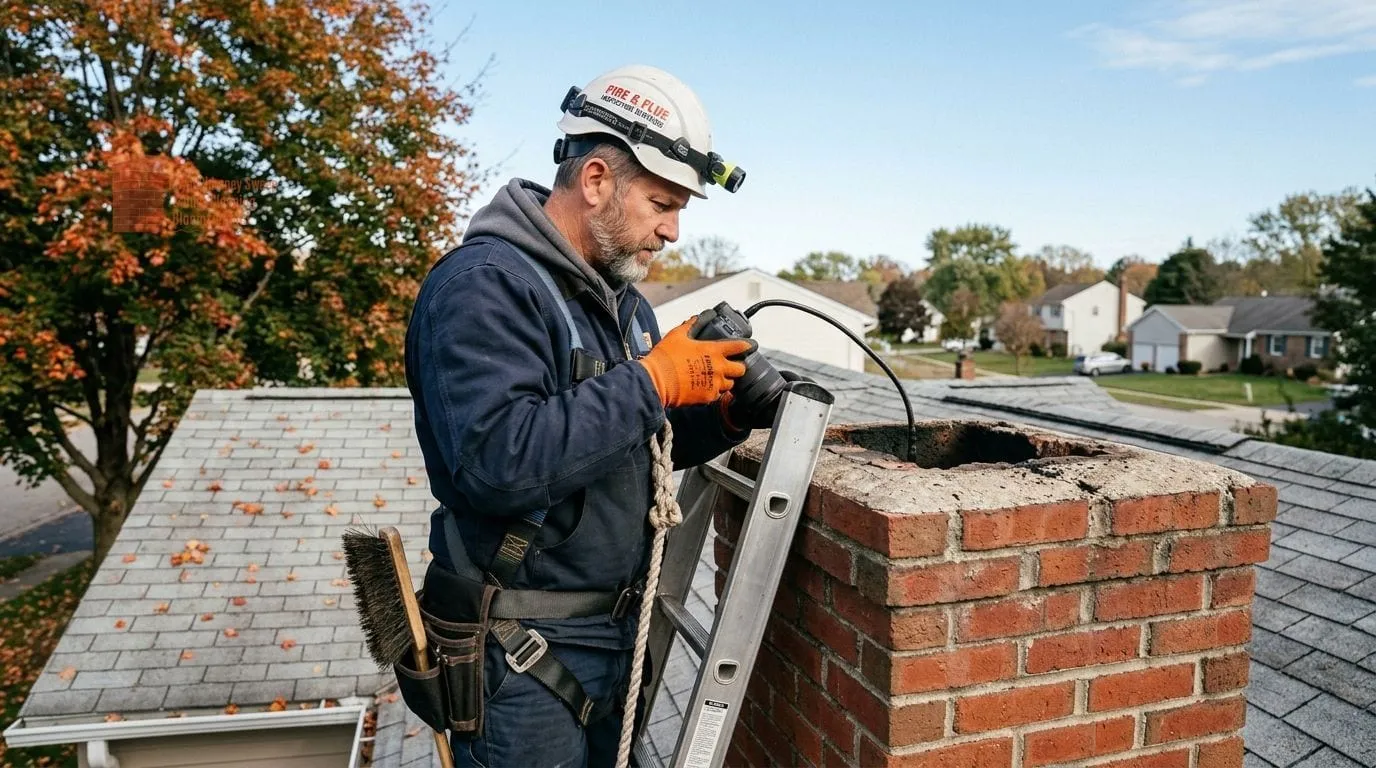
A stainless cap sized to the flue and fixed to stay on
Step flashing into the joints, then dressed over the shingles
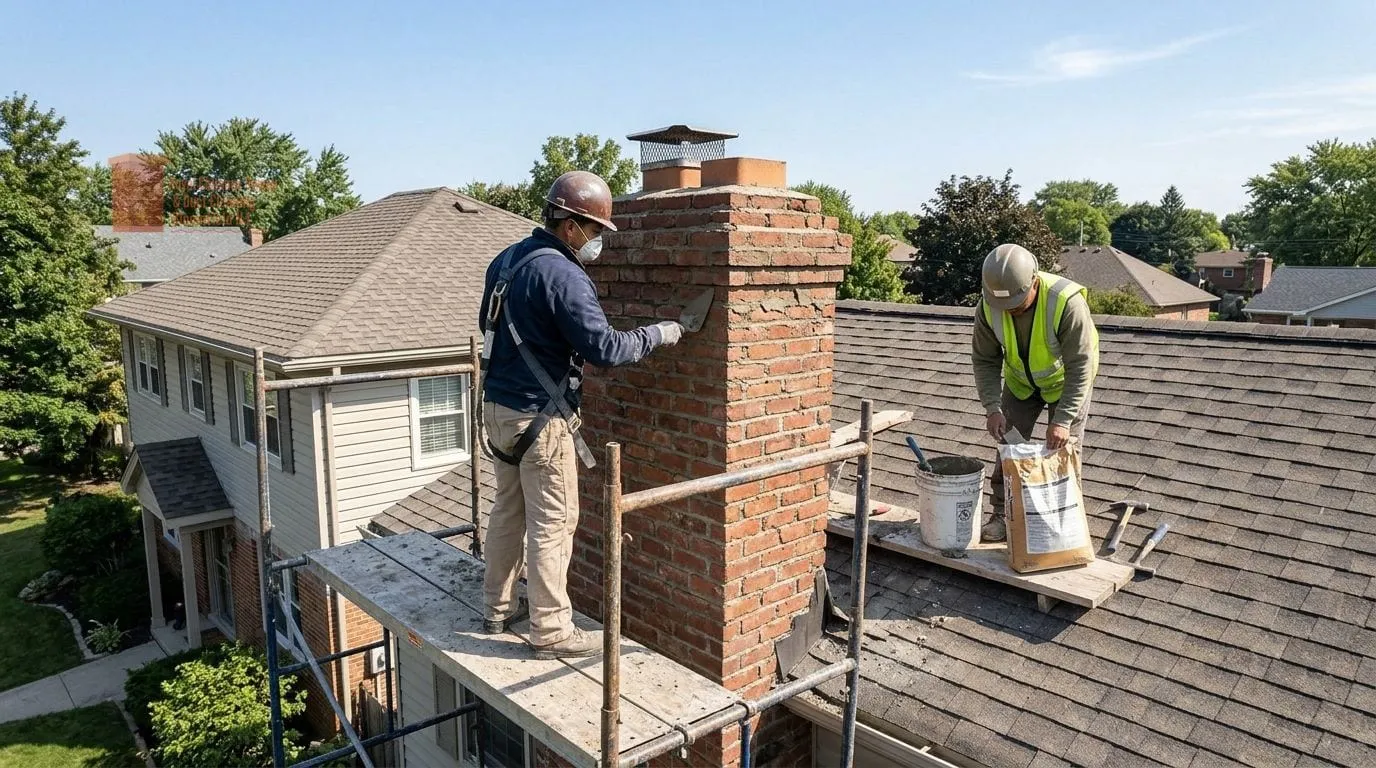
Staging where the work needs both hands and time
What Bloomfield homeowners say
5.0
38 reviews on Google
Read on
Expert setup, high-powered vacuums, and absolutely no dust residue. Excellent work.
Water had been leaking around the chimney flashing, but the repair solved it completely. The crew sealed and reinforced the affected area with precision. Rain is no longer a concern. The workmanship looks strong and durable.
Questions about chimney repair
There is a damp patch on my bedroom ceiling. Is that the chimney?
Often, and the position is the clue. A stain near the chimney breast points at flashing. A stain further into the room, or on a floor below, more often means water is running down inside the masonry from a failed crown. Neither is diagnosed from the ground, which is why the first visit is a ladder and a camera rather than a quotation.
My chimney was repointed a few years ago and it is leaking again.
Repointing the face of a stack does nothing about the top of it. If the crown is cracked through to the flue tile, water is entering above everything that was repointed and running down inside. It is a common sequence and it is why we look at the crown before the brickwork.
Can a cracked crown just be sealed?
A hairline with no path to the tile can sometimes be treated. A crack that has reached the flue, or one that has already opened and spalled, needs the crown rebuilt — a skim over the top of it sheds water for a season and then splits along the same line, because the movement that caused it has not gone anywhere.
Do I need a liner if the chimney is not leaking?
Possibly, and for a different reason. Relining is usually about the appliance rather than about water: where a boiler moved from oil to gas and nobody narrowed the shaft, the exhaust is turning back to water inside a chimney proportioned for something else entirely. The camera scan is what settles whether that is happening in your stack.
How long does chimney repair take?
It depends entirely which of the four it is, and on the weather — masonry and crown work need a dry run of days, which in New Jersey is its own scheduling problem. A cap is short. A crown rebuild is not. We will tell you honestly which one you are looking at once we have been up there.
Other things we do
Chimney inspection
An inspection is not a formality before a sweep. It is the part of the visit that decides whether sweeping is even the right thing to do, and on an older Bloomfield stack the answer is often no.
Read moreChimney sweeping
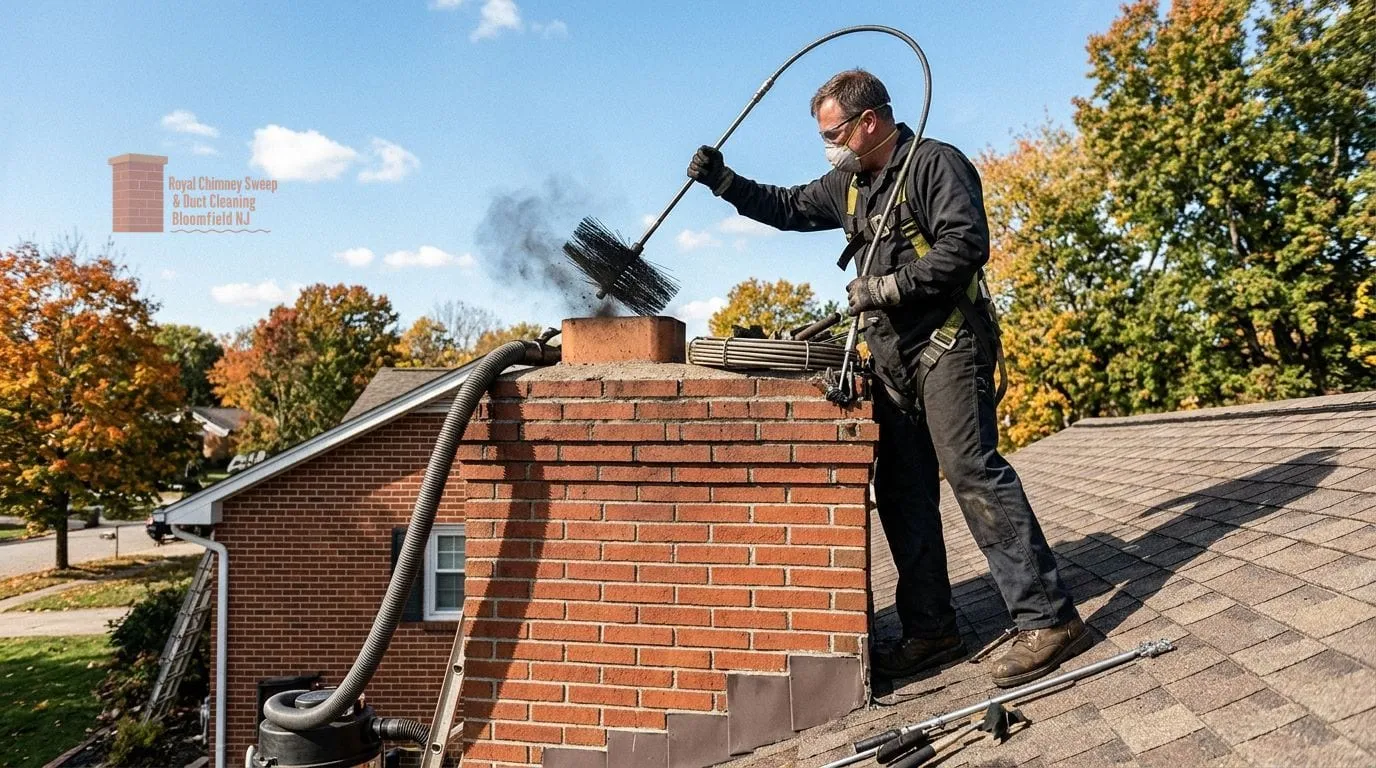
Creosote never announces itself. It gathers in the dark, a fraction more with every fire, and for most households the first warning is a room filling with smoke on the coldest evening of the year.
Read moreFireplace and stove service
A pilot that will not hold, a stove door that has stopped sealing, a room that smells of last night's fire — these are appliance problems, and they are usually cheaper than the chimney problem people assume they have.
Read more