Honest good working local company. The amount they quoted me on the phone was the price I paid after the service was completed.
Chimney sweeping in Bloomfield, NJ
Creosote never announces itself. It gathers in the dark, a fraction more with every fire, and for most households the first warning is a room filling with smoke on the coldest evening of the year.
5.0from 38 Google reviews20 towns · open 7:00 AM–9:00 PM
The short answer
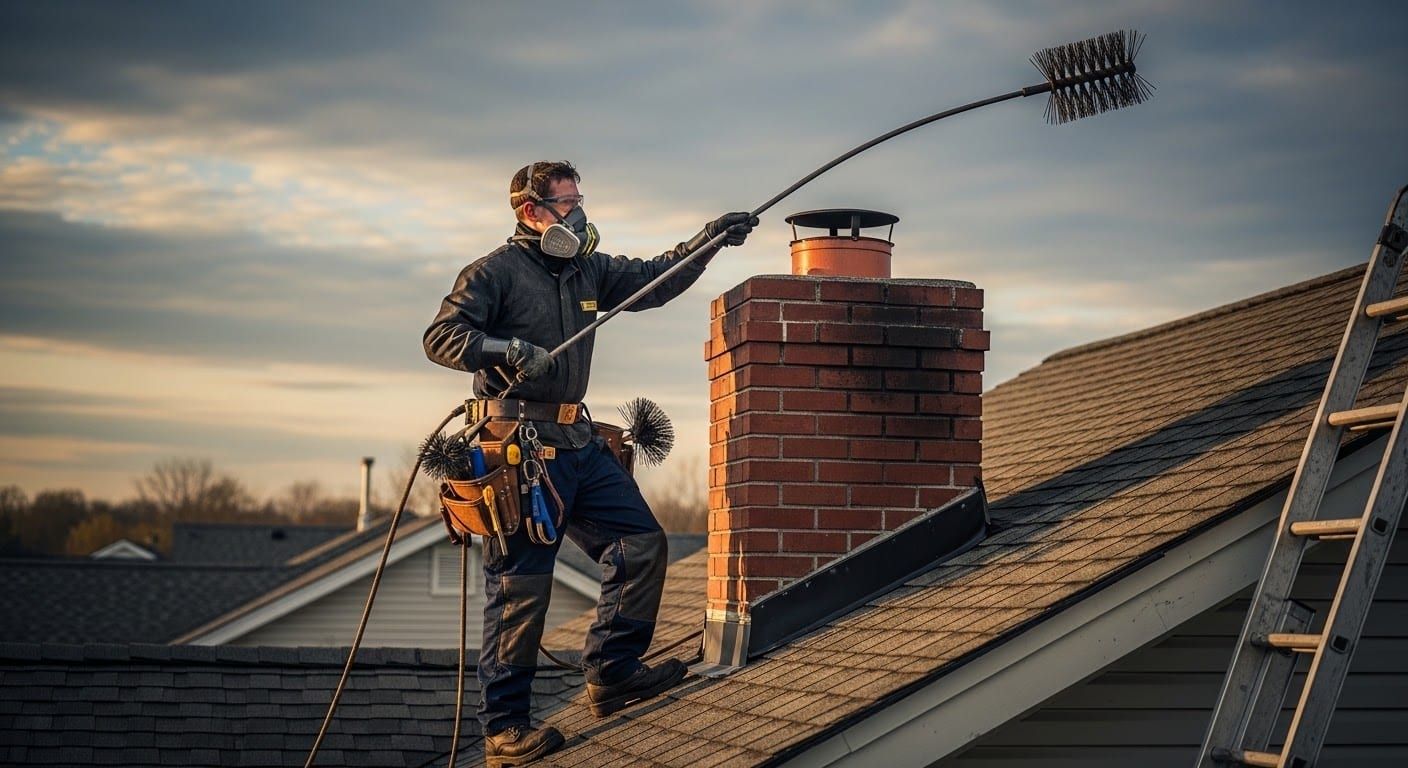
Sweeping a chimney means taking the soot and creosote back off the walls of the flue after a season of fires, and on a wood-burning fireplace it is the one piece of maintenance that keeps a normal winter from turning into a chimney fire. The national standard, NFPA 211, asks for an inspection every year and a clean whenever the deposit justifies one. What that works out to in a Bloomfield house depends far more on how the fire is run than on the calendar: burn seasoned hardwood in short hot fires and once a season is usually enough; damp it down to hold overnight, or burn wood cut last spring, and the layer thickens a good deal faster. We sweep across thirty-eight towns in Essex, Hudson, Union, Bergen, Passaic, Morris, Middlesex and Monmouth counties, and every appointment runs the same way — coverings down, a camera up the flue while you watch the screen, and only then any brush at all.
Three kinds of creosote, and only one of them brushes off
Creosote is what wood smoke leaves behind when it cools before it gets out of the chimney, and it turns up in three recognisable states that are not remotely the same problem. The first is dry and powdery, closer to soot, and a brush lifts it without any argument. The second has set harder and carries a shine to it, more like dried tar, and it wants rotary tooling rather than a hand brush. The third has glazed: a hard, glassy skin bonded into the liner that no brush will shift, and it is the one that catches. What decides which you are looking at is not the number of fires but how cold the smoke gets on its way up. An oversized flue, a stack running up an exposed north wall, wood that has not dried, or a fire shut down to smoulder through the night will each move you up that scale faster than a hot, brief fire in a flue sized for it.
- Stage one is dry and flaky and comes off cleanly with a brush
- Stage two has hardened and gone shiny, and needs rotary work
- Stage three has glazed onto the liner and is the stage that burns
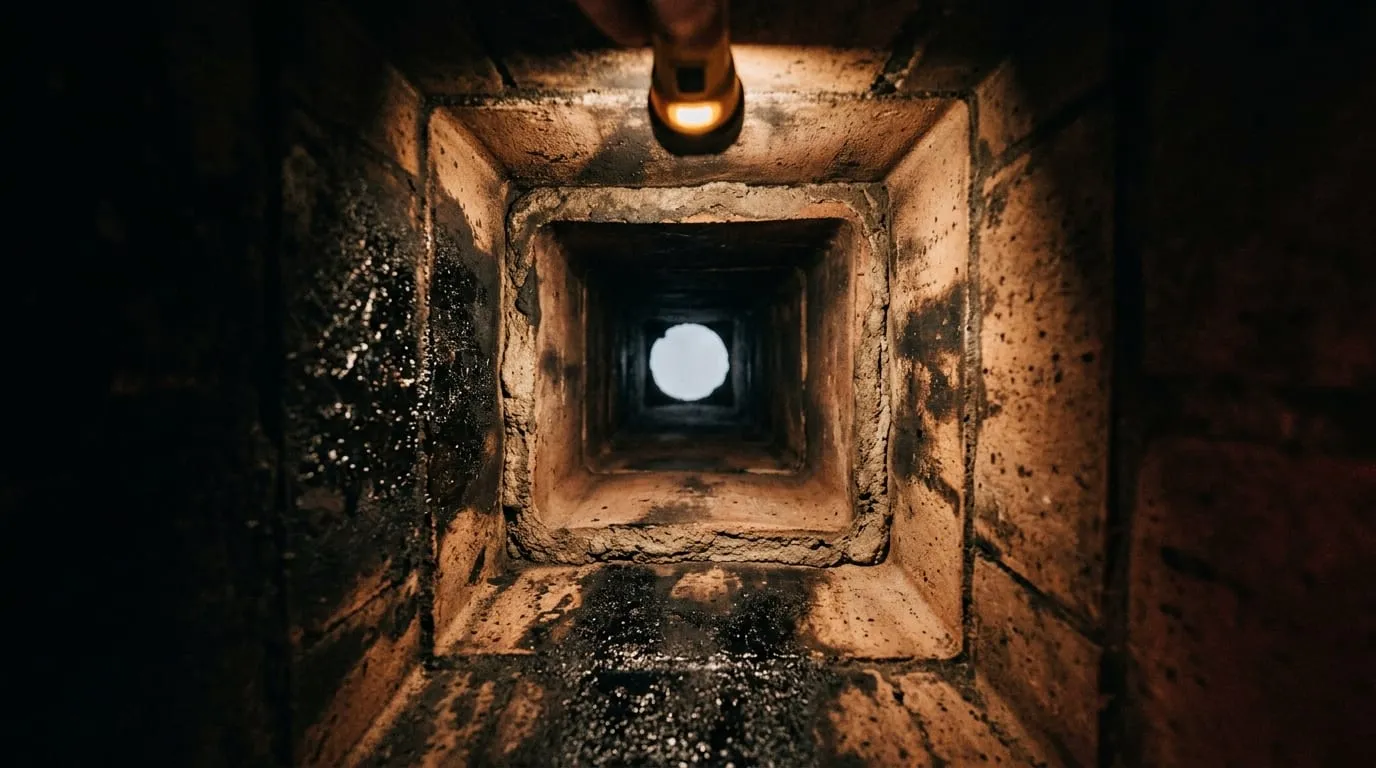
A brush cannot fix a flue that is the wrong size for what vents into it. That is why the camera goes down before the brush goes up.
The camera goes first, and you watch it
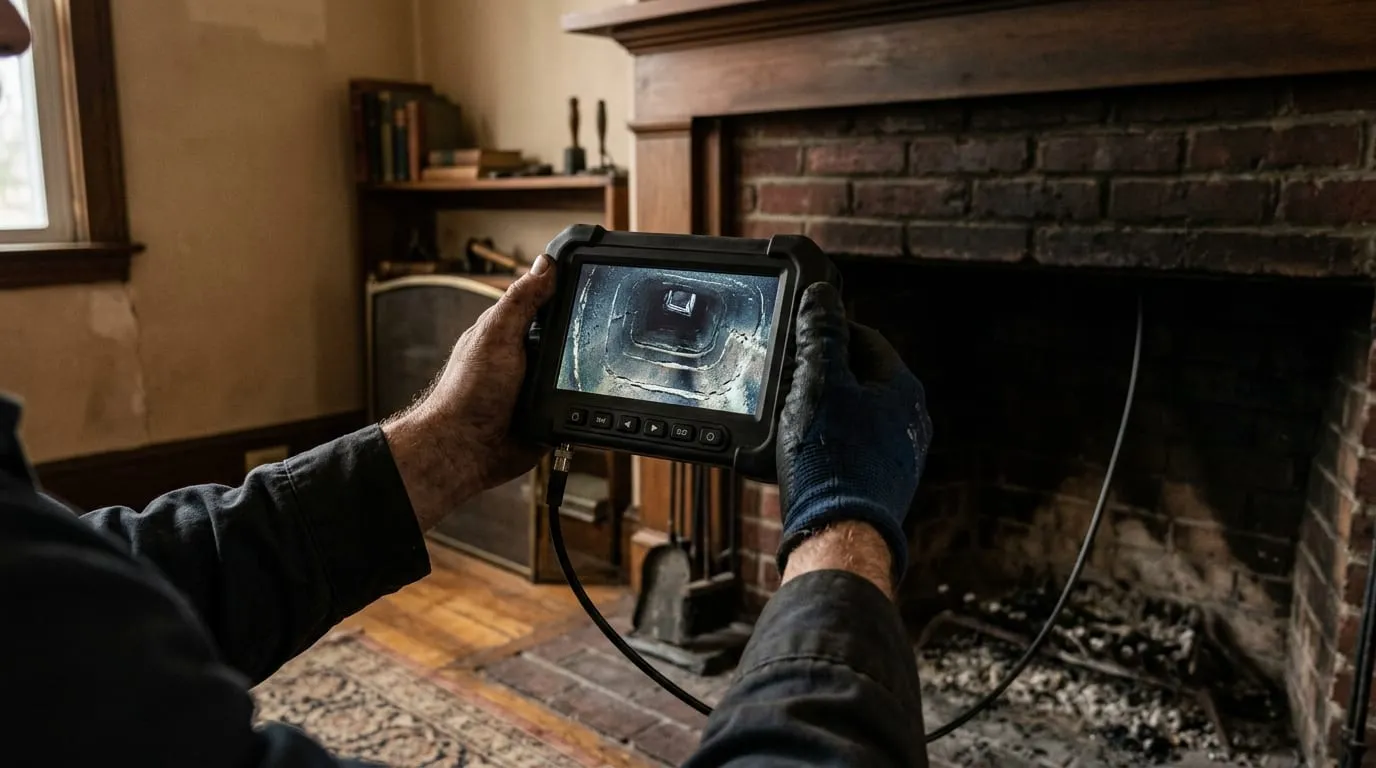
Brushing a flue you have not looked at is guesswork with a tool in your hand. So the camera goes down before anything else does, and the screen is turned towards you rather than away. You see the liner, the joints between the tiles, the smoke chamber above the damper, and whatever is actually sitting on those surfaces. In Bloomfield that matters more than it would somewhere newer, because a great deal of the housing here went up before the Second World War and has been through two changes of fuel since. What the camera finds is often not creosote at all but a flue several sizes wider than the appliance now venting into it, or a smoke chamber of rough corbelled brick that was never parged smooth. Neither of those is fixed by sweeping, and neither is visible from the hearth with a torch.
What we do about the mess, in detail
The complaint people arrive with is almost never about the sweeping. It is about what the last person left behind. So the sequence is fixed and it does not vary with how big the job looks: coverings go down over the hearth and out across the floor first, the vacuum is switched on before the damper is opened, and it stays running for the whole visit rather than being brought out at the end to tidy up. Rods come up from below so that what comes loose falls into the firebox and into suction, not out into the room. Where the roof can be walked safely the cap comes off and the flue gets worked from the top as well, which reaches the parts a rod alone will always skate past. Before we go, the hearth is swept out and photographed, so the state we handed it back in is on record and not a matter of opinion.
- Coverings down before anything is opened, never afterwards
- Suction running the entire visit, not produced at the end
- The hearth swept and photographed before we leave
What tends to turn up on Bloomfield jobs
Most of the township was built before 1940, and the chimneys came with it. They were put up for coal, converted to oil somewhere around mid-century, and converted again to gas later on — and hardly any of them were resized on the way through. A shaft proportioned for coal smoke dwarfs what a modern gas unit produces, so the exhaust surrenders its heat and turns back to water before daylight — and that water is acidic enough to chew the brickwork from a side nobody inspects. Around Bloomfield Center and along the avenue, where the housing turns to two- and three-family, one masonry stack usually serves more than one dwelling, and the first useful thing anybody can establish is which flue in it belongs to your appliance. Head out towards Brookdale and Oak View and the housing turns detached, at which point the recurring write-up stops being deposit and becomes rain — the slab on top and the metalwork where the stack breaks the roofline.
On the job
What this looks like in practice
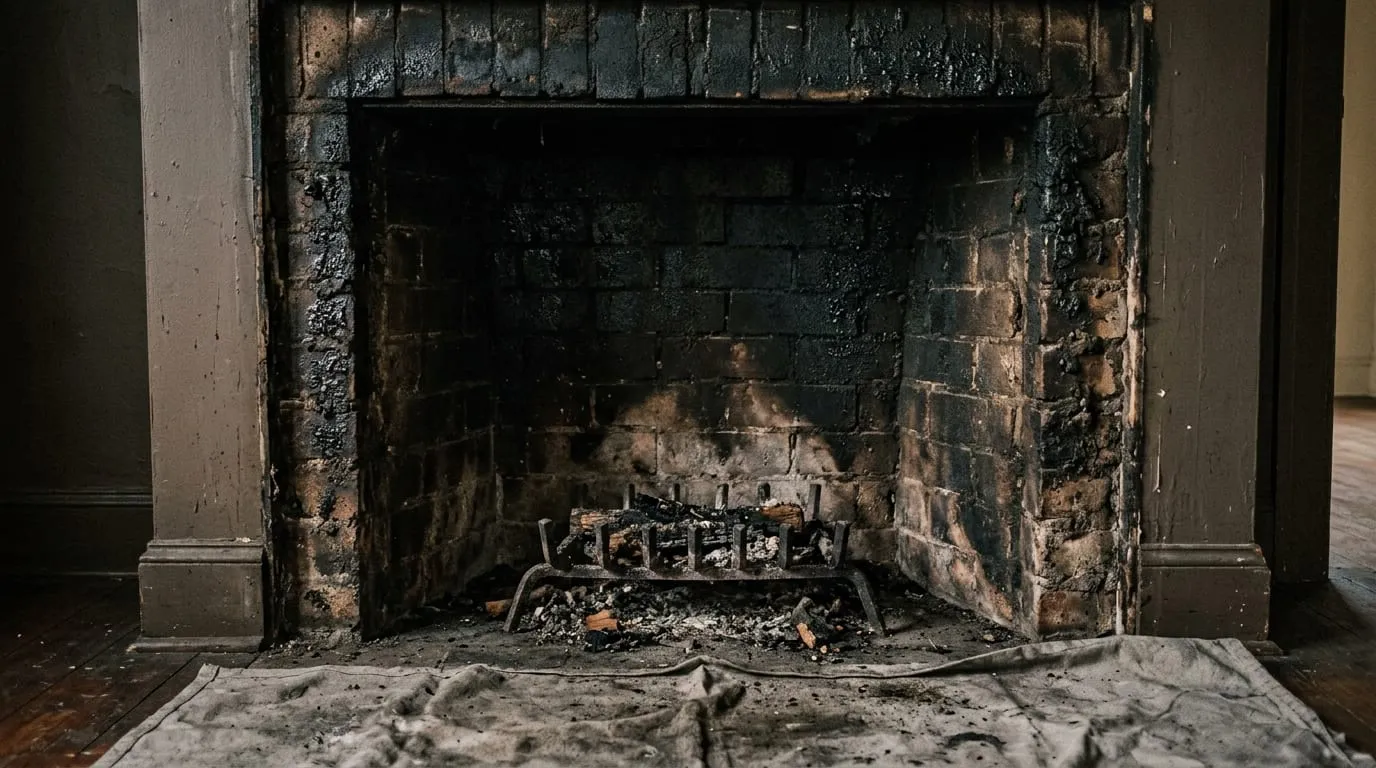
Before — deposit across the back wall and built up into the corners
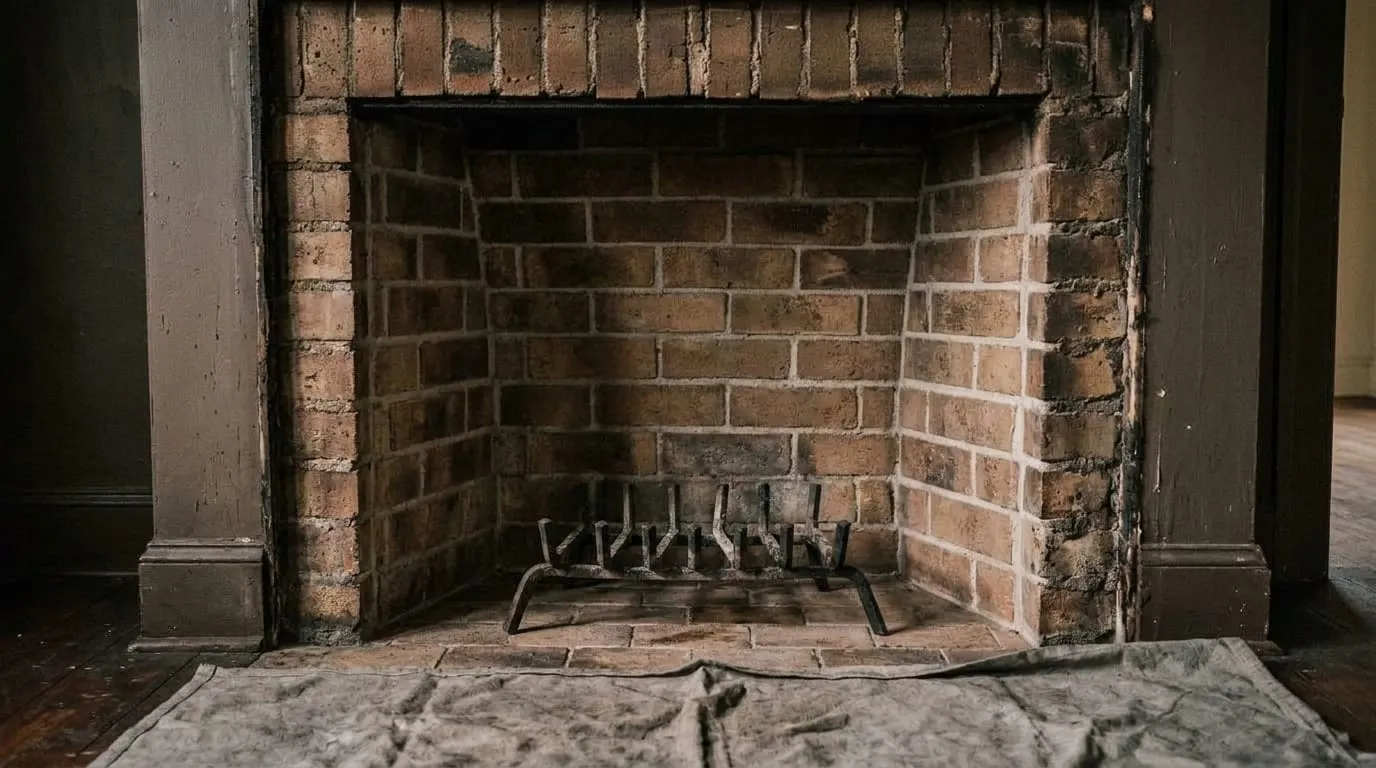
After — the same firebox, brick and mortar joints readable again
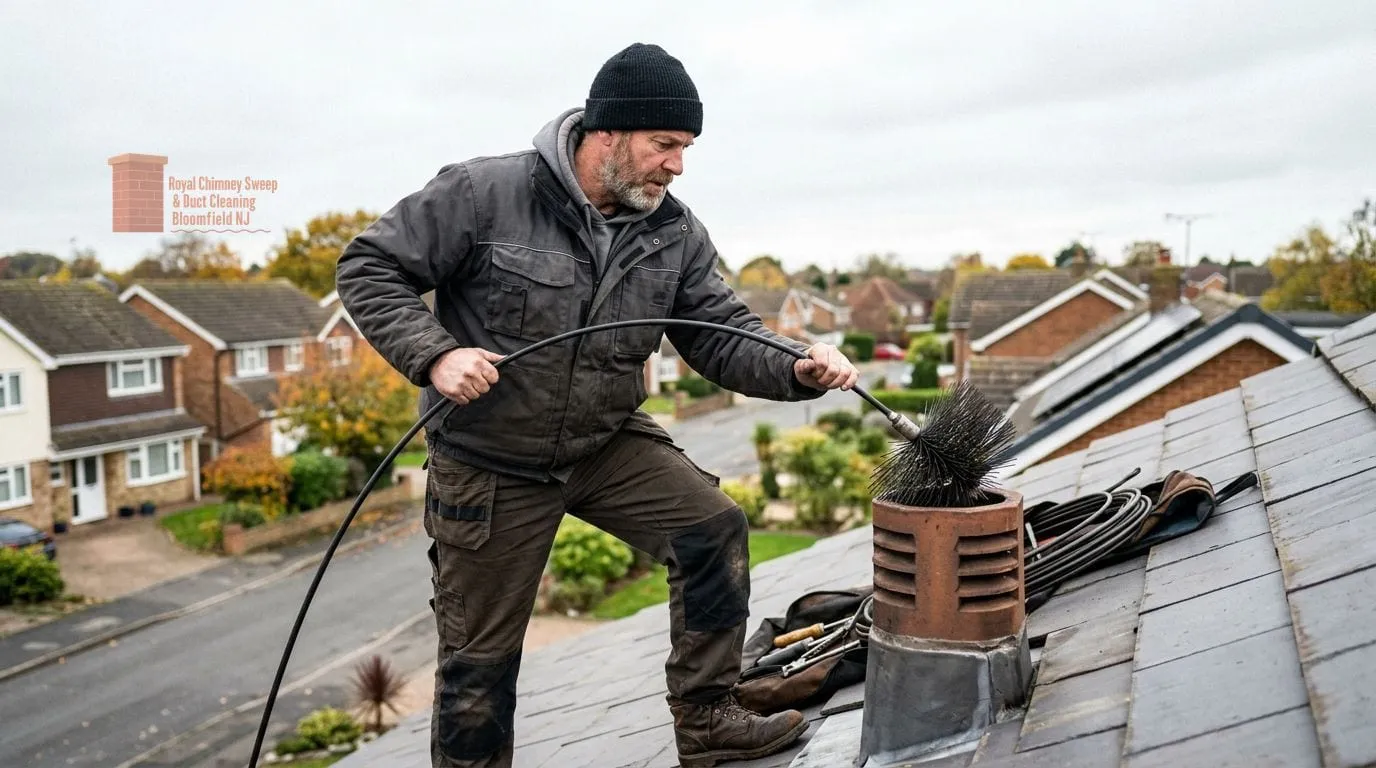
Suction at the crown, so what comes loose does not travel
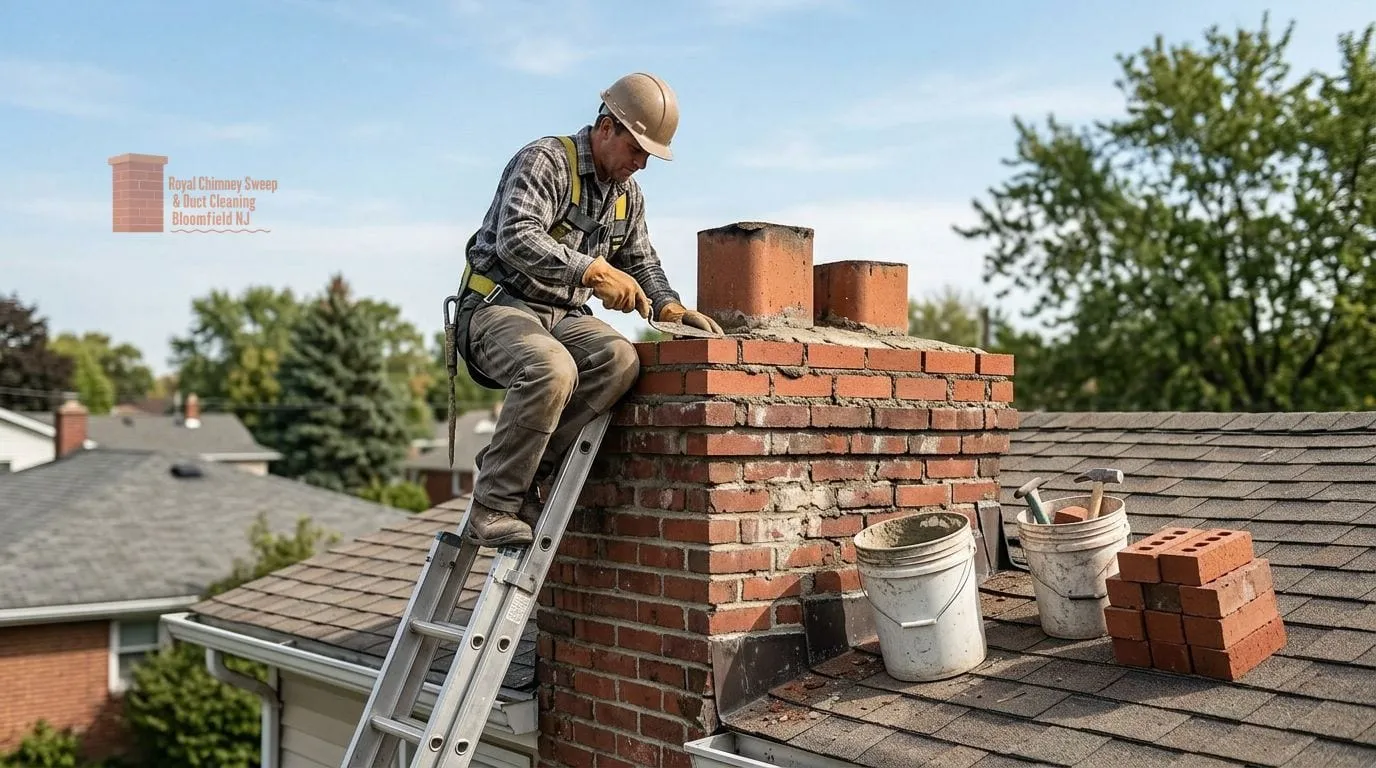
Worked from above as well, wherever the roof allows it
What Bloomfield homeowners say
5.0
38 reviews on Google
Read on
Expert setup, high-powered vacuums, and absolutely no dust residue. Excellent work.
Water had been leaking around the chimney flashing, but the repair solved it completely. The crew sealed and reinforced the affected area with precision. Rain is no longer a concern. The workmanship looks strong and durable.
Questions about chimney sweeping
How often does a chimney in Bloomfield need sweeping?
It is decided by how you burn, not by the date. A wood fireplace used through a full New Jersey winter usually wants a sweep once a year. Burn wood that has not had a summer to dry, or shut the fire down to hold overnight, and it can be sooner than that. A gas insert wants a yearly survey instead of brushing. Nothing accumulates in that shaft, but it corrodes just the same, which is a slower problem and a quieter one.
Will there be soot through my house afterwards?
No, and the order of work is what prevents it rather than the tidying up. Coverings go down before the damper is opened, the vacuum runs from that moment to the end of the visit, and the rods are worked from below so that what comes loose falls into suction instead of into the room. We photograph the hearth before we leave so there is no argument about the state it was handed back in.
We only burn a few fires a year. Is it still worth it?
Usually yes, and often for a reason that has nothing to do with creosote. A flue that goes unused for most of the year is a flue that birds, squirrels and leaves get into, and a chimney that is barely burned is often the one nobody has looked up in a decade. The camera pass matters more in that situation than the brushing does.
What if you find something that needs repairing?
You get told, you get shown it on the screen, and you get the photographs. Nothing is booked on the spot. If it is something to keep an eye on rather than act on, we say that too — a great many findings in older Bloomfield chimneys are worth knowing about and not worth doing anything about this year.
Do you sweep the boiler or furnace flue as well as the fireplace?
Two separate shafts inside one structure, and neither deserves to be skipped. People telephone about the hearth one. The boiler one is where the damage accumulates unseen, because what passes through it is cool and damp — after a fuel conversion that shaft is the whole reason the camera comes out.
Other things we do
Chimney inspection
An inspection is not a formality before a sweep. It is the part of the visit that decides whether sweeping is even the right thing to do, and on an older Bloomfield stack the answer is often no.
Read moreChimney repair
A stain spreading across a ceiling is a water problem with four possible causes, and the difference between them is which one you pay to fix.
Read moreFireplace and stove service
A pilot that will not hold, a stove door that has stopped sealing, a room that smells of last night's fire — these are appliance problems, and they are usually cheaper than the chimney problem people assume they have.
Read more