Level 1 or Level 2 — which chimney inspection do you need
There are two inspections a homeowner will ever be offered, they cost different amounts, and the wrong one answers a question you did not ask. The choice is simpler than it sounds.
The short answer
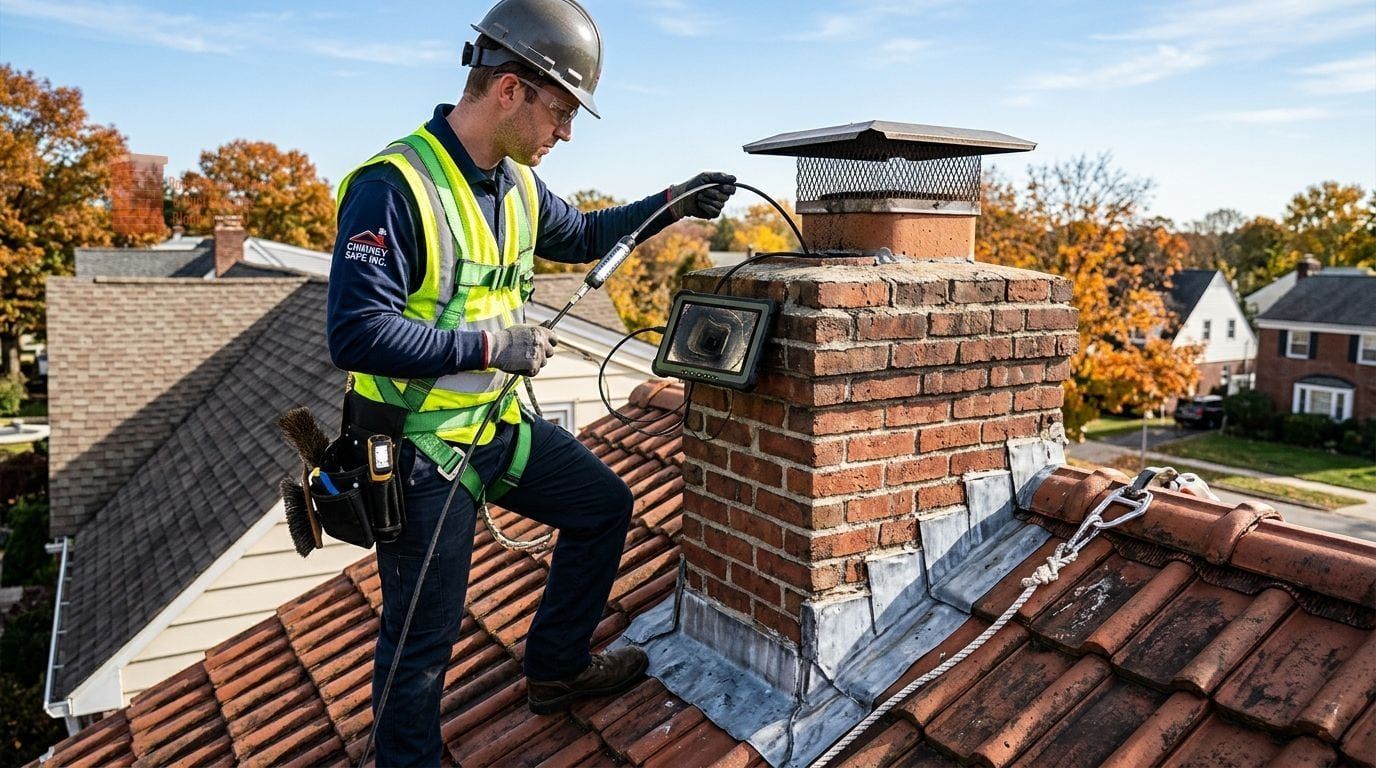
A Level 1 inspection is a visual examination of everything that can be reached and seen without taking anything apart: the firebox, the damper, the accessible run of the flue, the outside of the stack, and the connection to the appliance. It is the right choice for a chimney that has not changed and is doing the job it has always done, which for most households is most years. A Level 2 adds a camera scan of the full length of every flue and of the concealed parts of the structure. It is the right choice — and in some cases the only defensible one — whenever something has changed or somebody else is going to rely on the answer: a sale, a new appliance, a fuel conversion, a chimney fire however small, or any event that could have moved the masonry, including a storm or an earthquake. The practical difference is the camera, and on a chimney older than the people living with it, that difference is the entire report.
What a Level 1 actually covers
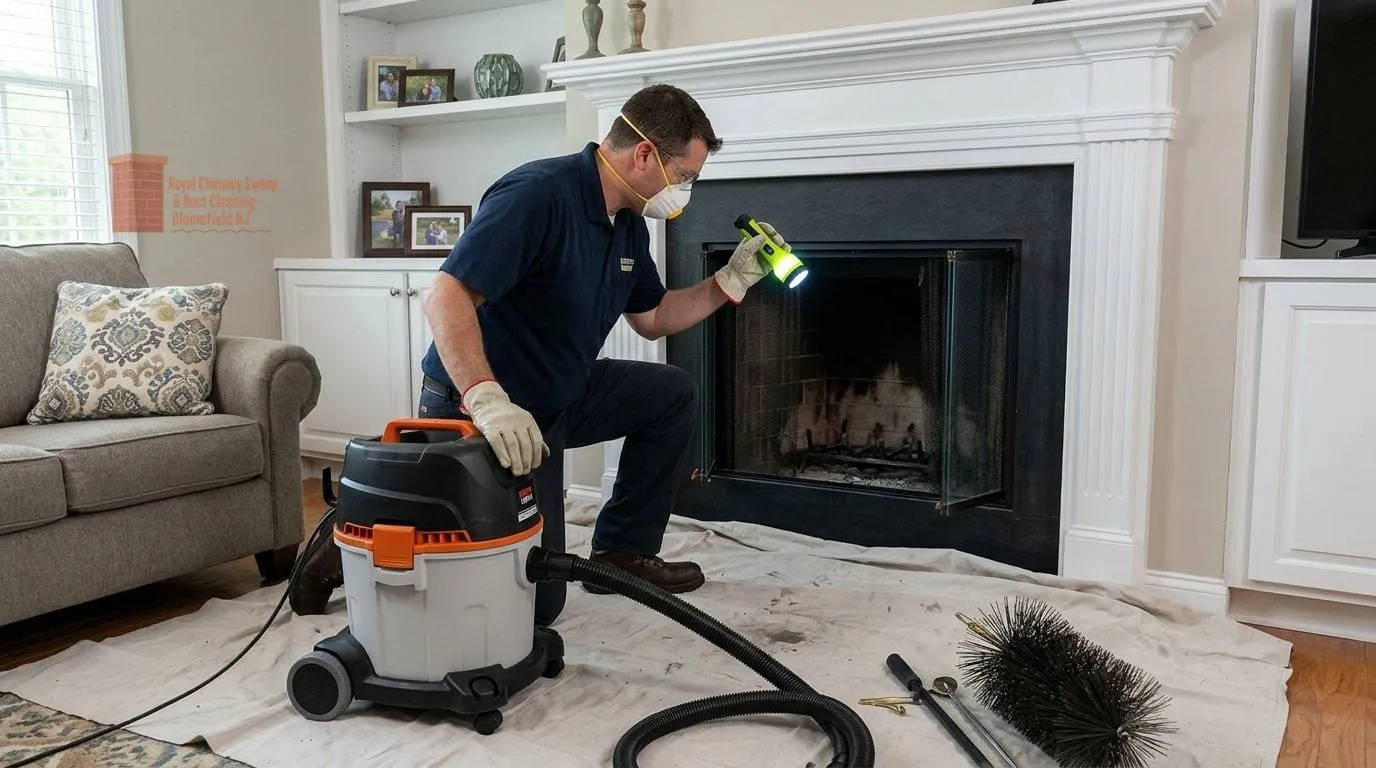
More than people expect, and less than they sometimes assume. It confirms that the flue is clear enough to use, that the structure is sound as far as it can be seen, that the appliance is connected the way it should be, and that nothing obvious has changed since last time. The inspector will look at the firebox and its brickwork, work the damper, look up the accessible part of the flue, and examine the outside of the stack from ground level and usually from the roof. For a household that burns a few fires a winter in a chimney nobody has touched in years, that is a sensible annual check and it is what the national standard expects. What it cannot tell you is anything about the parts nobody can see, which is a much larger fraction of the structure than it sounds.
- Firebox, damper, accessible flue, exterior, appliance connection
- Right for an unchanged chimney doing its usual job
- Cannot speak to the concealed structure, which is most of it
What the camera adds
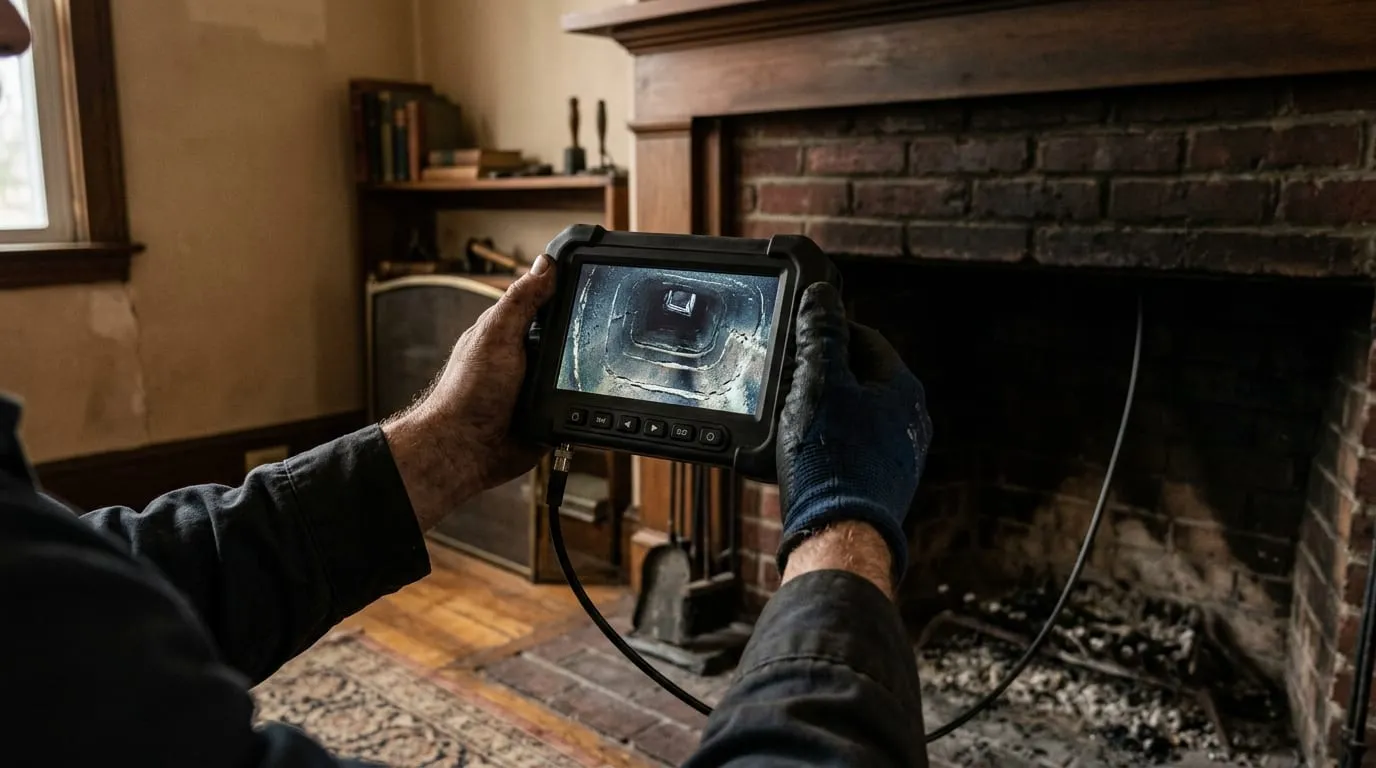
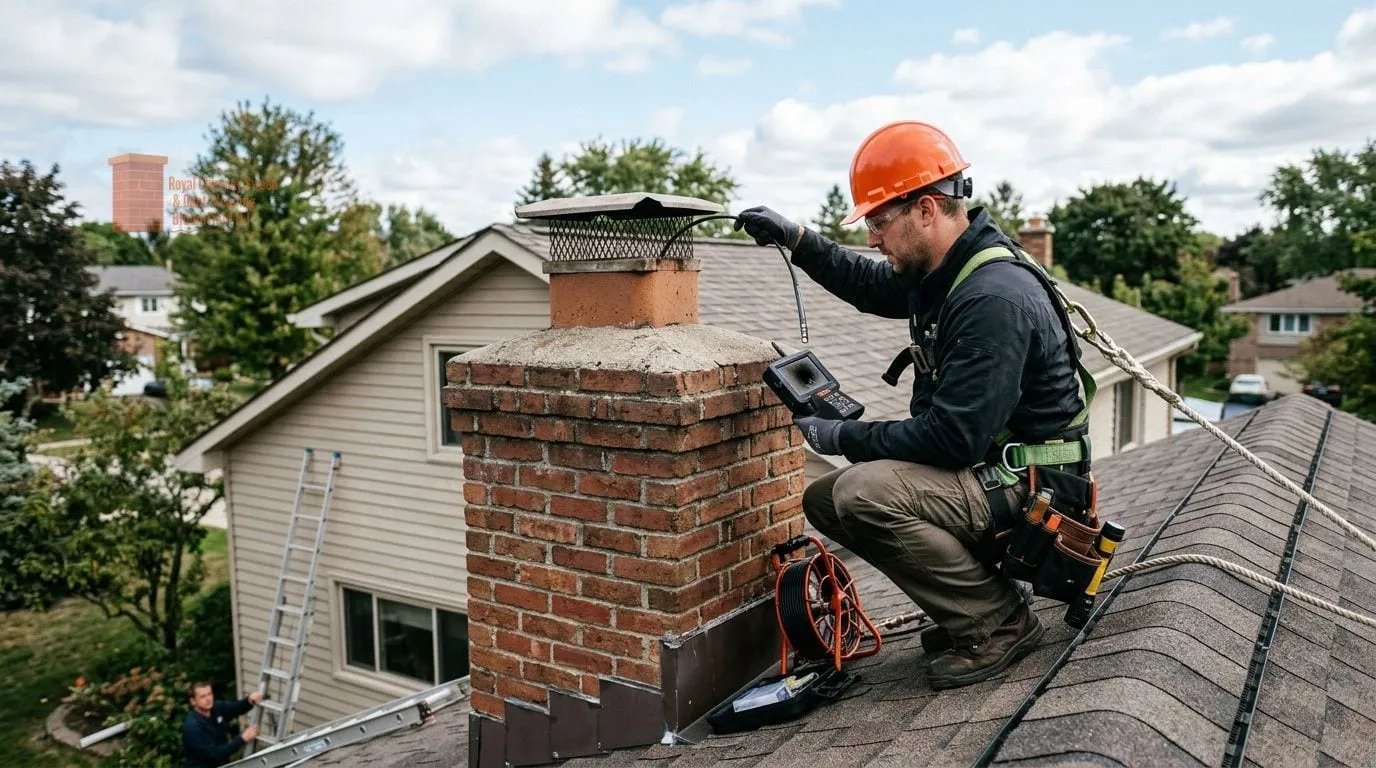
A Level 2 puts a camera down the full length of the flue, and it changes the question from "does this look alright" to "here is what is in there". The things it finds are specific and they are not visible from either end: mortar joints between clay tiles that have opened, tiles that have cracked or shifted, a smoke chamber that was never parged smooth, a separating wall between two flues that has failed, glazed creosote bonded to the liner, and the shape and size of the shaft itself relative to whatever is now venting into it. On a pre-war stack that has carried coal, then oil, then gas, at least one of those is usually present, and none of them is fixed by sweeping.
The situations that always mean Level 2
Five of them, and each has the same logic behind it: something has changed, or somebody is about to depend on the answer. A sale or purchase, because a buyer is relying on it and a Level 1 does not support that weight. A new or different appliance, because the flue that suited the old one may not suit this one. A fuel conversion, for the same reason and more so. A chimney fire, including a small one that appeared to put itself out, because heat damages liners and joints invisibly. And any event that could have moved the structure — a serious storm, a lightning strike, an earthquake, or work done to the roof. In each case the question is about the concealed structure, and the camera is the only thing that answers it.
- Buying or selling the house
- A new appliance, or a different one
- A conversion from one fuel to another
- A chimney fire, however minor it seemed
- A storm, a lightning strike, an earthquake, or roof work
There is a Level 3, and you will probably never meet it
Level 3 is what happens when a Level 2 finds something serious and the only way to understand it is to open the structure up — removing part of a wall, a chimney crown, or other masonry to reach a hazard that has been identified but cannot be assessed any other way. It is destructive by definition and it is not something anybody proposes lightly or as a first step. If somebody leads with a Level 3 before a camera has been down the flue, that is a conversation worth pausing. In ordinary practice the sequence is Level 1 annually, Level 2 when something changes, and Level 3 only when a Level 2 has already found the thing that justifies it.
What to ask for when you call
Say what has happened rather than naming a level. "We are buying a two-family and the closing is in three weeks" gets you the right inspection more reliably than asking for a Level 2 by number, because it also tells the person on the phone what the report needs to contain and who is going to read it. Ask whether the report will include photographs, whether every flue in the stack will be identified separately, and whether you will get it in writing. Those three questions sort out most of the difference between an inspection you can use and an inspection you were present for.
Questions people ask about this
Is a Level 2 worth it if the chimney seems fine?
If nothing has changed and nothing is being relied on, a Level 1 is the sensible annual check and there is no reason to pay for more. The trigger for a Level 2 is a change or a decision, not a suspicion.
Does a sweep include an inspection?
A competent sweep always includes looking, and on a wood-burning chimney the camera pass before the brush is part of doing the job properly. What it does not automatically include is a written report to Level 2 scope, which is a different deliverable and should be asked for by name.
We had a small chimney fire. Can we use the fireplace?
Not until it has been scanned. A chimney fire can crack tiles and open joints without leaving anything visible from the firebox, and the next fire is the one that finds the damage. This is the clearest Level 2 case there is.
Who sets these levels?
They come from NFPA 211, the national standard for chimneys, fireplaces and vents, which defines the three levels and the circumstances each applies to. They are not a company's invention and any competent chimney professional will recognise the terms.
Want somebody to look at yours?
Tell us what you are seeing and we will tell you which of these it is. We answer the phone from 7:00 AM to 9:00 PM, every day.
The services this is about
Chimney inspection
An inspection is not a formality before a sweep. It is the part of the visit that decides whether sweeping is even the right thing to do, and on an older Bloomfield stack the answer is often no.
Read moreChimney sweeping
Creosote never announces itself. It gathers in the dark, a fraction more with every fire, and for most households the first warning is a room filling with smoke on the coldest evening of the year.
Read more