
The signs a dryer vent is blocked, in the order they appear
A dryer that needs two cycles is not a dryer that is wearing out. It is a dryer working against a duct that has narrowed, and it has been telling you so for a while.
The short answer
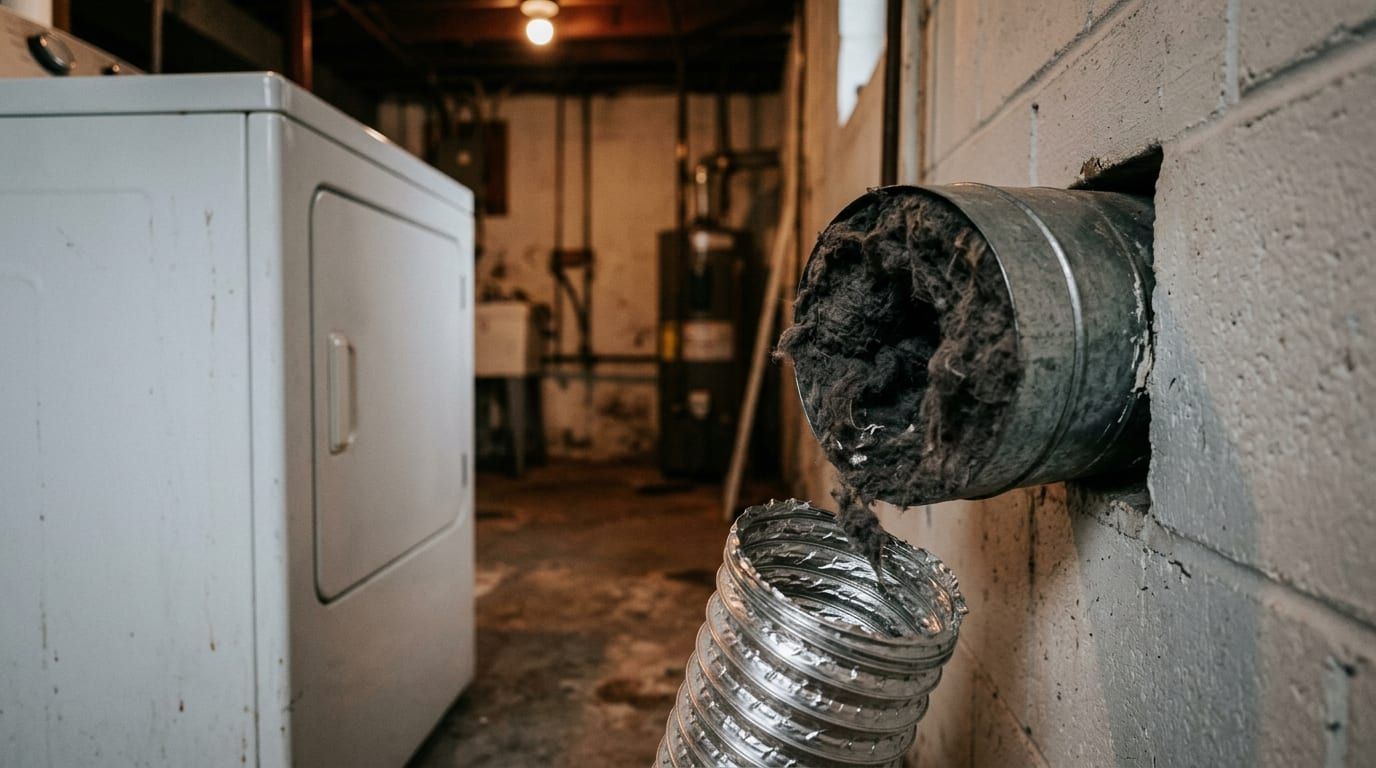
A blocked dryer duct produces symptoms in a fairly reliable order, and the first of them is the one everybody ignores: cycles get longer. A load that used to dry in one now needs a second, then part of a third. After that the machine itself begins to run hot — the top of the dryer becomes uncomfortable to touch and the laundry room feels humid, because the moisture that should be leaving through the duct is staying in the room. Later still, clothes come out hot but still damp, the machine may start cutting out on its own thermal limit, and there can be a faint scorched smell. That last stage is not a laundry problem. Lint is dry fibre packed into a hot pipe, and a restricted dryer duct is a recognised cause of house fires. The trap catches some of the lint; the duct catches all of the rest.
The order the signs arrive in
Longer cycles come first and they arrive gradually enough that most households adjust without registering it — a second cycle becomes normal, then the second cycle becomes the one that actually does the work. The next sign is heat where there was not heat before: the top panel of the dryer, the wall behind it, sometimes the laundry room itself. Then humidity, because a duct that is not moving air is not moving moisture either. Then clothes that emerge hot but still damp, which confuses people because the machine is obviously working hard. Then the machine cutting out mid-cycle on its own thermal protection. A burning smell is late in this sequence, not early.
- Cycles get longer, and the second cycle becomes normal
- The dryer top and the room get noticeably warmer
- Clothes come out hot but still damp
- The machine begins shutting itself off mid-cycle
- A scorched smell — late in the sequence, not early
Why the lint trap does not prevent it
The screen in the door catches the large majority of what comes off the clothes and it is worth emptying every load. What it cannot do is catch all of it. Fine fibre passes the screen on every cycle — that is inherent, not a sign of a worn-out filter — and once past, it travels into the duct and settles wherever the air slows down. That means elbows, any section that rises, and anywhere the duct sags between supports. It builds from the wall of the pipe inwards, so the opening narrows steadily while looking, from the one end anybody ever sees, entirely normal. Cleaning the trap protects the machine's own airflow. It does nothing whatsoever about the run.
What makes a run worse than average
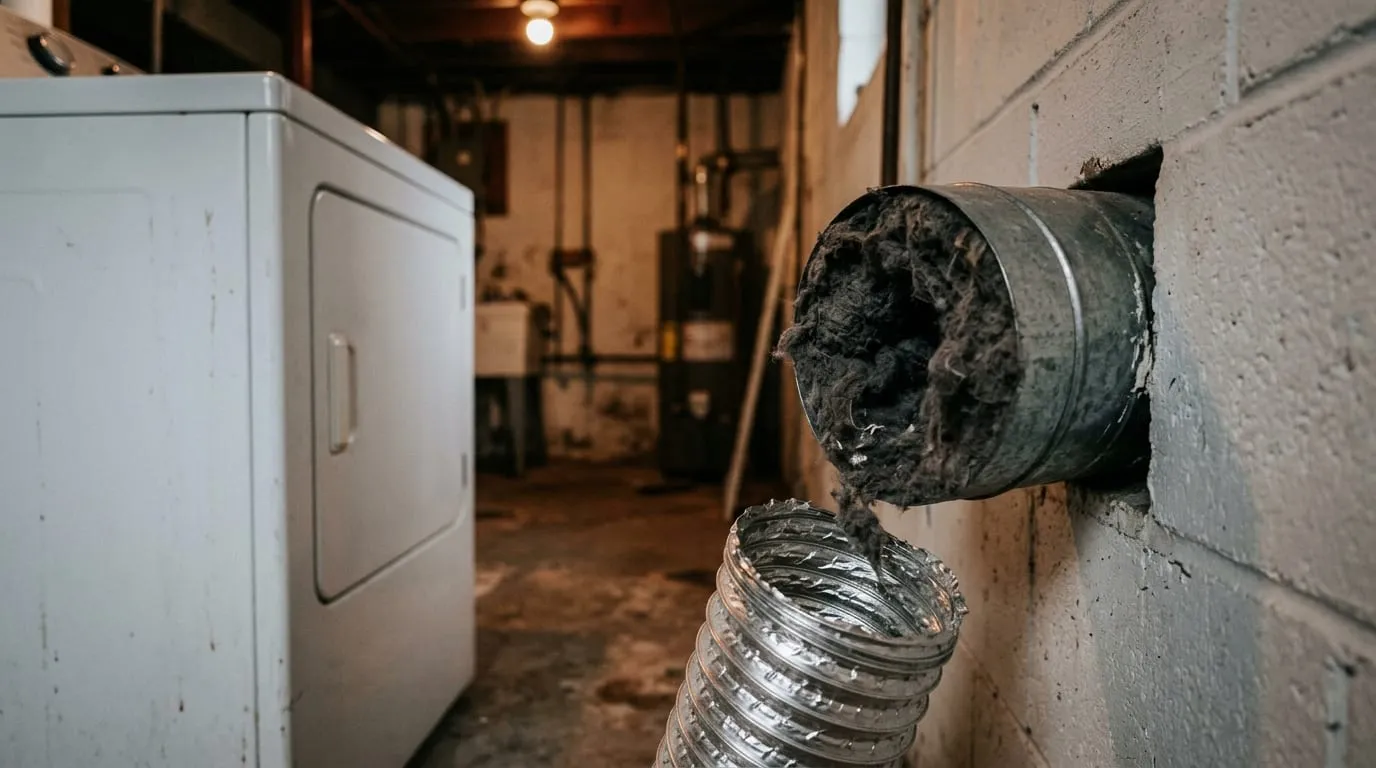
Length, bends and direction, and older Bloomfield housing supplies all three. A basement laundry means the duct has to travel upwards before it travels outwards, and lint settles on every rising section by definition. A long internal run through joist bays before reaching an outside wall — common in the two- and three-family stock — adds bends and adds distance. Flexible foil transition hose crushed into the gap behind the machine is the single commonest specific fault, because it kinks and traps in a way rigid pipe does not. And an exterior hood on an awkward elevation is the one nobody has looked at, which is where the flap gets held open by lint and birds get in.
- A basement laundry means a rising run
- Long internal runs add bends and distance
- Crushed foil transition hose behind the machine
- An exterior hood nobody can easily see
The two things you can check yourself today
Go outside while a load is running and put your hand at the exterior hood. There should be a strong, warm, obvious flow of air and the flap should be standing open. Weak flow, or a flap that is barely moving, is the whole answer. Then pull the machine out far enough to see the transition hose behind it. If it is the flexible foil kind and it has been crushed into the gap, that is a fault you can see and it is worth fixing regardless of anything else. Neither check requires tools and between them they identify a large proportion of blocked runs before anybody is called out.
- Feel the airflow at the exterior hood with the dryer running
- Check whether the hood flap is actually standing open
- Look at the transition hose behind the machine for crushing
Why it is treated as a safety job rather than a convenience one
Because of what lint is. It is dry, fine, tightly packed fibre sitting inside a pipe carrying hot air, and a restricted duct makes that pipe hotter than it was designed to be. Dryer fires are a documented and preventable category of house fire, and a blocked vent is the most commonly cited contributing factor. That is the reason this job gets a different tone from duct cleaning, which is largely about dust and comfort. It is also why we would rather you did the two checks above and found nothing than assumed the longer cycles were the machine getting old.
Questions people ask about this
How often should a dryer vent be cleaned?
About once a year for a household with a short run, sooner for a long run with several bends — which describes most basement laundries in older housing. The honest indicator is the machine: when a normal load stops drying in one cycle, it is due.
Can I clean it myself with a kit from the hardware store?
For a short straight run to a side wall, often yes. For a long run with bends, the difficulty is that a brush without suction relocates the lint rather than removing it, and it usually stops at the first elbow it cannot negotiate. The result feels like the job was done and the airflow does not change.
My dryer is only a couple of years old and the cycles are getting longer.
Then it is very unlikely to be the dryer. A new machine drying slowly is almost always working against a restricted duct, and it is worth checking the run before anybody is called out to look at the appliance.
Does a longer cycle really matter that much?
As a symptom it matters a great deal, because of what it is a symptom of. As an inconvenience it is minor. The reason to act on it is that the same restriction that doubles your cycle time is what makes the duct hot.
Want somebody to look at yours?
Tell us what you are seeing and we will tell you which of these it is. We answer the phone from 7:00 AM to 9:00 PM, every day.
The services this is about
Dryer vent cleaning
If a load takes two cycles where it used to take one, the machine is not failing. The duct behind it has narrowed, and the dryer is working against it.
Read moreDuct repair and replacement
One room that never gets warm is rarely a thermostat problem. It is usually a duct that has come off, been crushed, or been leaking into a crawlspace for years.
Read more